
Snowshoe Hare Monitoring

Snowshoe hares are a key species in the ecosystem at JPRF. To monitor their abundance, staff conduct pellet counts across 11 sites, with each site containing 100 transects.

Initiated in the fall of 2018, these surveys have revealed evidence of cyclical population trends in snowshoe hares. Such population dynamics may have significant implications for predator species, including the Canada lynx.
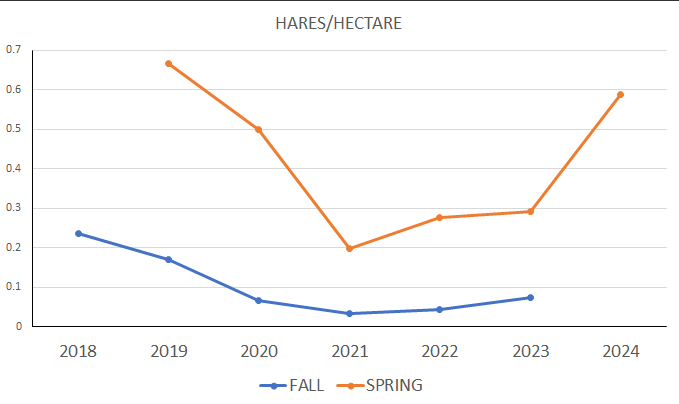
Line graph showing hares per hectare from 2018 to 2024, with two lines labeled 'Fall' in blue and 'Spring' in orange. Spring hare counts start high, decrease until 2021, then increase again. Fall counts gradually decrease until 2021, then slightly rise.
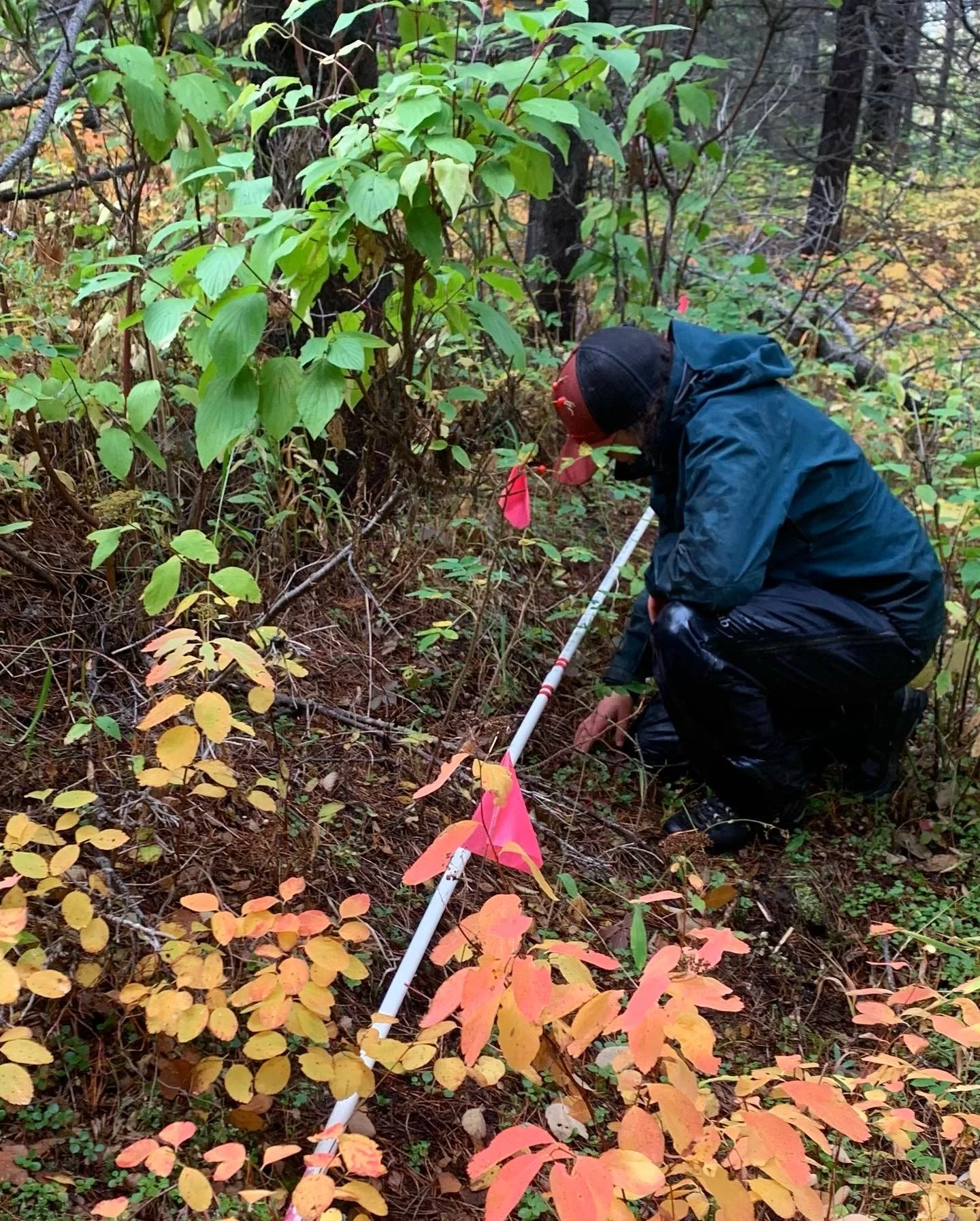
A person in outdoor clothing crouching in a forest, measuring a plant or terrain with a long measuring stick marked with pink flags.
Two hikers walking along a trail in a dense forest, carrying backpacks and using trekking poles, surrounded by green trees and grass under a partly cloudy sky.

Collaborators

  • A man wearing a light-colored cap and a green jacket, smiling outdoors with trees in the background.

    Dexter Hodder

    JPRF

  • A man with a beard and cap on a boat, smiling under a blue sky with clouds.

    Dr. Shannon Crowley

    JPRF

  • A man smiling outdoors in a snowy environment, wearing a black beanie with 'AKMARK' and a flag patch, next to a black and white dog.

    Dr. Karl Larsen

    TRU

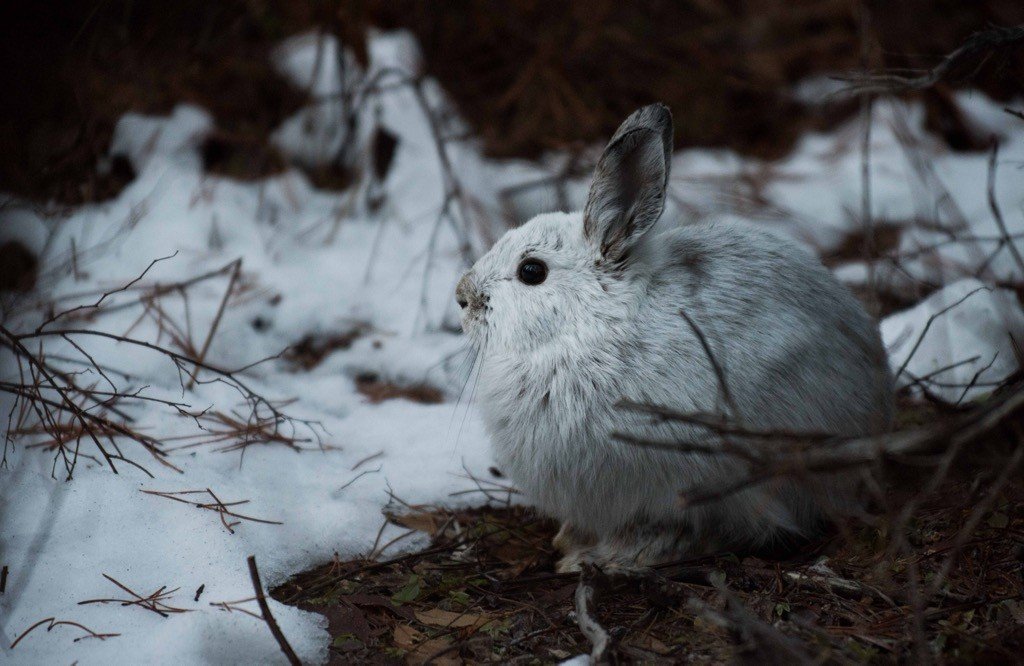
A grey rabbit sitting on the ground among snow and brown twigs in a natural outdoor setting.

Publications

Funding provided by

  • The logo of John Prince Research Forest, featuring a mountain, pine tree, bear, and eagle, with a circular border containing text about the research forest.

  • M Technologies logo in blue text with a stylized 'M' and a dot above the 'i'.